A Pocket-Sized Ritual for a New Notebook
A new notebook ritual turns a blank first page into a usable record: choose a question, add a small mark, and leave room for later answers.
The usual mistake with a new notebook is waiting for a thought important enough to deserve the first page. The blank paper becomes a quiet test, and the notebook stays blank. A new notebook ritual can instead make the opening a modest record of what you want to notice, without turning it into a portrait of who you are.
Set aside a few minutes when the notebook arrives. Use the opening page to record a particular moment, not to announce a personal philosophy. That distinction makes it easier to return to the page later without having to defend an old answer.
What should the first question notice?
Choose a question tied to the notebook’s immediate occasion. “Who am I?” asks one page to settle a matter it cannot settle. “What keeps catching my attention this week?” points toward something observable: a phrase, a place, a repeated task, or a small irritation.
The question can draw on why the notebook is here. Perhaps you picked it up after changing jobs, found it in a drawer, or want a place for thoughts that keep landing on receipts. Keep that circumstance in view, but do not make it a permanent assignment.
These prompts invite details rather than declarations:
- What did I keep noticing today?
- What would I like to remember about this ordinary stretch of time?
- Which small task or thought keeps returning?
- What can stay unfinished on this page?
Choose one prompt and write it in your ordinary handwriting. If you revise the wording, cross out the first version and write the new one beneath it. The edits show how the question took shape; they do not need to become a story about your character.
What belongs on the opening page?
Add a date or a brief note about the occasion if it will help you locate the entry later. Write the question, then add one simple mark: a dot in the margin, a short underline, or a small square. A pencil or ballpoint pen is enough. The mark makes the start visible without turning the page into a craft assignment.
Leave room beneath the question. Write a sentence, a few fragments, or nothing yet. There is no need to fill the page simply because it is available. If you are deciding what to do next, use these checks:
- If the question asks for a verdict about your whole identity, replace it with a question about a recent observation; otherwise, keep the narrower prompt.
- If the wording depends on remembering why you chose the notebook, add a short occasion note; otherwise, leave that space open.
- If the mark takes more effort than writing the question, simplify it to a dot or line; otherwise, keep the mark you chose.
- If an answer feels forced, write “not sure yet” or leave it blank; otherwise, record the answer in the words you have.
- If the page feels crowded, move the answer to the next page and add a small arrow; otherwise, leave the open space as it is.
- If you want a record that is easy to find, date the entry; if not, omit the date and keep the page uncluttered.
How can you return without keeping a streak?
Treat the first week as an invitation to revisit the question, not a schedule you must complete. When you open the notebook again, read the prompt once and add one thing: a new observation, a changed answer, or a note that the question no longer fits. Skipping a day requires no explanation.
What should you write on the first visit?
Write the question and the small mark, then answer if something comes to mind. If no answer comes, write “not sure yet” or leave the space open; either choice records the state of the page without pretending to settle it.
What belongs on a later visit?
Read the question and add a fresh detail or sentence. You do not have to copy the earlier answer, explain a gap, or make new entries agree with old ones.
How should you record a changed answer?
Put the newer answer beside the earlier one, adding a date or short note if that helps distinguish them. Leave the original wording intact so it remains a record of what you wrote then, rather than a draft to be corrected.
When should you retire the question?
If it no longer fits, draw a line beneath it and write a brief note such as “not the question now.” Keep it if it still draws your attention, or carry a revised prompt to the next page if the old wording has become too narrow.
What can a worked page look like?
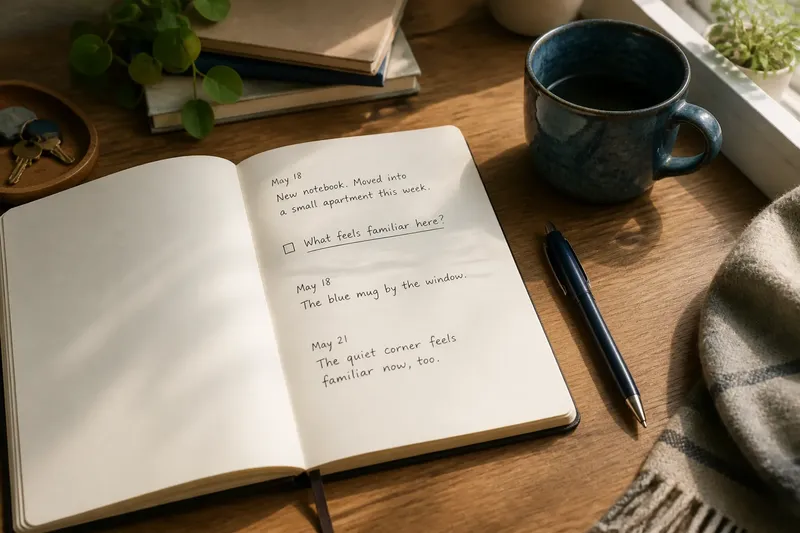
Say you have just moved into a new apartment and, using invented details for this example, write the question, “What feels familiar here?” You add a small square beside it and answer, “The blue mug by the window.” On a later visit, you write, “The quiet corner feels familiar now, too.” The resulting page preserves two observations from different visits; it does not require either one to stand for your whole sense of home.
This is a useful distinction for a notebook ritual: it can hold dated, particular observations without asking them to form a polished account of you. If the question becomes irrelevant, that is a reason to change the page, not evidence that the earlier entry was mistaken.
What if the ritual feels like homework?
Reduce the task until starting feels possible. Keep only the question and mark, make one entry rather than returning through the week, or close the notebook until you want to use it. The ritual should make a page easier to begin, not create a new standard for being reflective.
You can change the format to suit the way you like to record things. Draw a symbol and add a few words if writing feels cumbersome. Reserve one page for the prompt and use the next for later observations if you prefer more room. Choose the arrangement that lets the notebook remain useful without requiring every answer to fit one account of who you are.
For a new notebook ritual, the practical starting point is small: write a question about something you can notice, add a mark, and leave space for another visit. Keep the first page easy to return to. A date or occasion note can help you see when an answer belongs, while leaving the old wording intact keeps change visible without making it a verdict.