The One-Page Self-Portrait Is Not a Test
A one-page self-portrait can turn a vague prompt into a focused creative exercise, with simple choices for words, objects, and images that feel personal.
The most common mistake with a one-page self-portrait is trying to make it read like a polished biography. That turns a small creative exercise into editing work, and the page loses the lively details that could make it yours. A self-portrait can begin with what is on the desk, in a pocket, or on your mind.
You do not need to draw a face or write a list of traits. A page can combine a sketch, a few objects, a song title, a remembered phrase, or a map of places you return to. Think of it as a small arrangement of chosen details, not a verdict about your character.
What can a one-page self-portrait include?
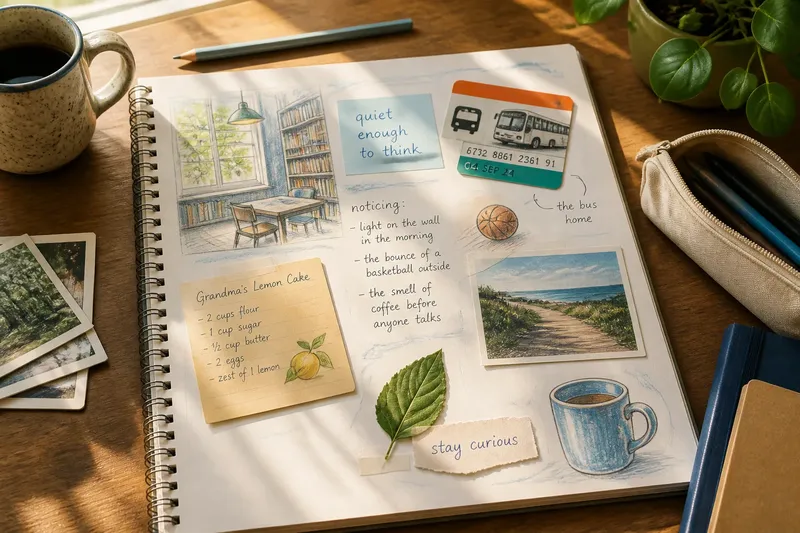
Start with the materials the prompt permits. A notebook page and pencil are enough; colored pencils, a glue stick, or a notes app can help if they suit the task. Words and images can share the space. A bus route beside a line of text may say more than a paragraph about being “adventurous.”
Choose details with different textures: something you do, something you notice, and something you keep close. These might be a recipe card, the sound of a basketball bouncing in the park, or a phrase someone in your family uses. The point is not to make every detail symbolic. Sometimes a favorite chipped mug is simply a favorite chipped mug.
- If the page feels too abstract, then add a concrete object or place; if that feels too revealing, choose an ordinary detail instead.
- If words are crowding the page, then replace a sentence with a small drawing; if drawing feels uncomfortable, use a symbol or a single word.
- If the portrait looks overly tidy, then add a detail that does not fit the theme; if it distracts from the page’s purpose, leave it out.
- If a memory feels private, then leave out names and circumstances; if even a broad reference feels too personal, choose a different memory.
- If the prompt requires a written answer, then include the requested words; if it allows visual work, let images carry some of the meaning.
- If you cannot decide what belongs, then include one detail from today; if it seems irrelevant after a short pause, swap it for something you keep returning to.
How do you turn a prompt into a page?
Translate a broad prompt into a few smaller choices. “Who are you?” is a large question; “What do I keep noticing?” is easier to answer with an object, image, or sentence. Make a rough arrangement before writing neatly. Leave a margin so the page can breathe, and avoid spending the whole session choosing a title.
Imagine you have a blank sheet, a blue pencil, a bus pass, and a prompt asking what makes a place feel like yours. You sketch the bus pass in one corner, draw the library window where you wait after school, and write “quiet enough to think” beside it. The resulting page points to a place and a routine without requiring a polished explanation of your personality. If the prompt is for a group, you can omit the school detail and keep the drawing and phrase.
When you use a phone or tablet, a basic notes or drawing app is enough. Keep the canvas simple; adding fonts and decorative borders can become a surprisingly elaborate way to avoid deciding what the portrait should contain.
How can you choose details without oversharing?
First identify the audience: only you, a teacher, a workshop group, or a public portfolio. Then decide what each detail contributes. A private memory may work in a journal but feel unnecessary on a classroom sheet. You can show a connection without including its backstory: draw a recipe card, for instance, rather than explaining a family disagreement around it.
Before including a sensitive detail, check who will see the page, whether it may be kept or shared, and whether the assignment actually asks for that information. If the answer is unclear, ask the organizer or choose a less revealing detail. Keeping something private is a design decision, not a failure to participate.
What should you do when the page feels stuck?
Use a visible starting point. Pick up an object nearby and write three plain observations about it: its shape, where it came from, or when you use it. You can keep one observation, turn another into a drawing, and discard the rest. This gives the page material without demanding a sweeping idea.
If the prompt asks for a drawing and you do not want to draw a person, draw a place, object, or repeated pattern instead, as long as the instructions allow it. If you are unsure, check with the person who assigned the exercise. A page of objects can be deliberate; it need not be an apology for not drawing a face.
What do readers ask about a one-page self-portrait?
Does a one-page self-portrait need to show my face?
No, unless the prompt specifically requires a face or figure. Objects, places, colors, and short text can form a portrait through the details you choose.
What if I do not think of myself as artistic?
Use handwriting, simple shapes, collage, or a few labeled objects. The task is to make choices about what to include, not to demonstrate drawing technique.
Can I use photographs or magazine cutouts?
Yes, if the assignment permits them. A printed photo, a magazine clipping, or a small paper scrap can sit beside a handwritten note; check any sharing or copyright rules if the page will be published.
How much should I explain on the page?
Explain enough for the intended reader to follow the choices you want them to understand. A short caption can clarify an image, while a private journal page may need no explanation at all.
How can you finish without overworking it?
Give the page a brief practical review: can you tell what the main details are, is anything included only because it seems impressive, and have you left out anything you do not want to share? Make one useful adjustment, then stop. A self-portrait does not improve automatically with another layer of labels.
If you keep the page, add its date or the prompt that started it. That small note helps explain why you chose those particular objects or words later. The most useful part may be the detail you had not planned to include, such as the bus pass that made the library come to mind.